
Keeping business records in Switzerland: 10 years, GeBüV and digital archiving
Ten years of retention, but from when exactly? And can you throw away paper receipts once they are scanned? An overview of the CO, the GeBüV and VAT practice, with a checklist for your digital archive.
12 October 20266 min read
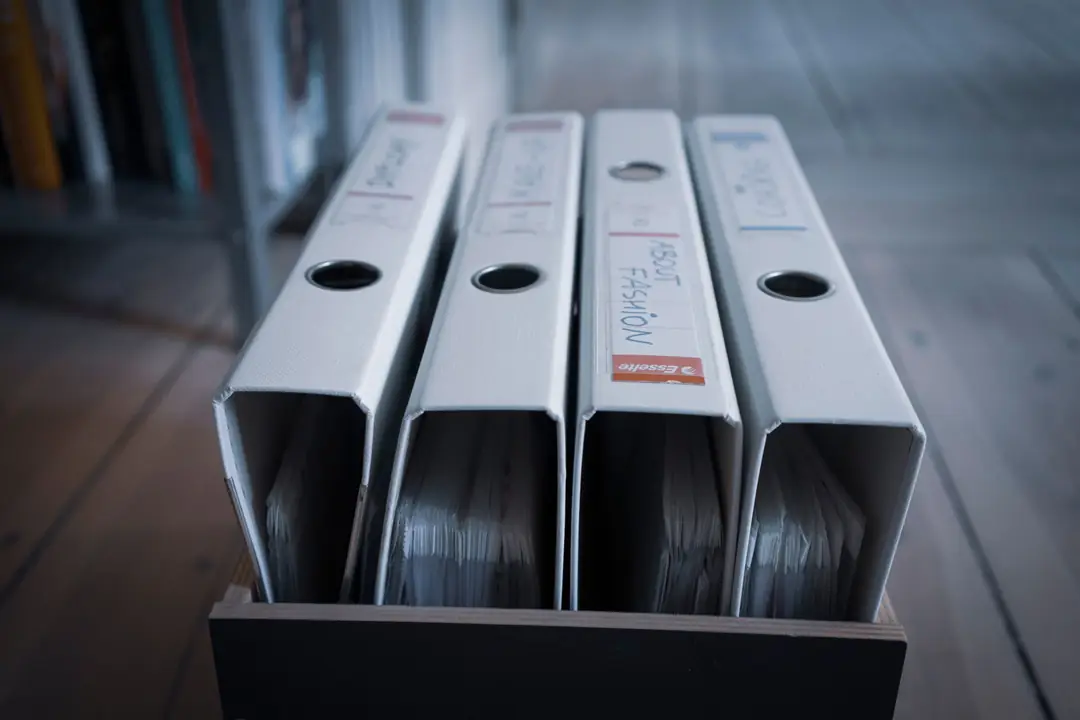
Every entry needs a receipt, and every receipt has to stay retrievable for years. That sounds like a filing cabinet, but today it can be handled entirely digitally. What matters is that your digital archive meets the legal requirements. This article explains what the Swiss Code of Obligations (CO/OR), the Ordinance on Accounting Records (GeBüV) and Swiss VAT law actually require.
What you must keep
Art. 958f CO lists four categories:
- the accounting records (the general ledger with its accounts and journal, plus the subsidiary ledgers),
- the supporting documents,
- the annual report,
- the audit report.
Under Art. 957a CO, a supporting document is any record, on paper or in electronic form, needed to trace an entry. This includes incoming and outgoing invoices, receipts, till slips, bank statements, contracts with an accounting impact, payslips and expense receipts. Under accounting law, business correspondence only has to be kept if it serves as a supporting document, such as an order confirmation on which an entry is based. The GeBüV counts payroll, accounts receivable, accounts payable and stock records, among others, as subsidiary ledgers.
How long: ten years from the end of the financial year
The retention period is ten years. It does not start on the date of the document, but at the end of the financial year.
Example: a supplier invoice dated 15 March 2026 belongs to the 2026 financial year, which ends on 31 December 2026. The retention period runs until 31 December 2036.
A similar rule applies for VAT. Under Art. 70 of the Swiss VAT Act (MWSTG), records must be kept until the tax claim becomes absolutely time-barred, which happens ten years after the end of the tax period. For records on real estate that are needed for input tax recovery on prior use (Einlageentsteuerung) or for own use, the VAT Act even requires 20 years.
| Records | Retention period |
|---|---|
| Accounting records, supporting documents | 10 years from the end of the financial year (Art. 958f CO) |
| Annual report, audit report | 10 years, in writing and signed |
| VAT-relevant records | until absolutely time-barred, 10 years after the end of the tax period |
| VAT records on real estate (Einlageentsteuerung, own use) | 20 years |
| Bookkeeping work instructions | as long as the accounting records they relate to (Art. 4 GeBüV) |
Paper or digital?
The CO allows both. Accounting records and supporting documents may be kept on paper, electronically or in a comparable form, as long as they match the underlying transactions and can be made readable again at any time.
There is one exception: the annual report and the audit report must be kept in writing and signed. Your signed annual accounts therefore belong in the archive in that form.
In its VAT Info 16 (MWST-Info 16), the Swiss Federal Tax Administration (FTA/ESTV) makes clear that electronically stored documents carry the same evidential weight as paper ones. It even describes a case where supplier invoices are scanned on arrival, checked digitally and attached to the entry, while the originals are destroyed. The condition is that the principles of proper bookkeeping and all the requirements of the GeBüV are met.
What the GeBüV requires
The Ordinance on Accounting Records describes what a compliant archive looks like. The key points:
Integrity (Art. 3): records and documents must be kept in a way that makes any change detectable.
Documentation (Art. 4): organisation, responsibilities, procedures and the software used must be set out in work instructions. These instructions must be kept for as long as the records themselves.
Care and availability (Art. 5 and 6): records must be stored in an orderly, protected way and be available for inspection within a reasonable time until the end of the retention period. On request, they must also be readable without technical aids, for example as a printout.
Organisation and archive (Art. 7 and 8): archived data must be kept separate from current data or labelled accordingly. The archive must be inventoried and protected against unauthorised access, and access must be logged.
Storage media (Art. 9): unalterable media such as paper or write-once data carriers are permitted. Alterable media, such as hard drives or cloud storage, are allowed if technical procedures safeguard integrity (digital signatures, for example), the time of storage can be proven in a tamper-proof way (with a timestamp, for example), and the procedures are documented and logs and log files are kept.
Checks and migration (Art. 10): storage media must be checked regularly for readability. If you transfer data to another format or system, you must ensure it is complete and accurate, and log the transfer.
Common mistakes in practice
- Receipts left in an email inbox: an inbox is not an archive. Emails can be deleted, and they are easily lost when you change provider.
- Scanned receipts with no link to the entry: a folder of PDFs that are not linked to entries makes every audit harder.
- Changing software without exporting data: if you switch accounting software, you must keep the old data readable, even after cancelling the subscription.
- No work instructions: small businesses in particular rarely write down their process. A single page is often enough.
- Destroying originals too early: if you throw away paper before the scan has been checked and stored in an audit-proof way, you risk a gap.
Example: a small GmbH's archive
An advertising agency with four employees receives around 120 receipts and invoices a month: supplier invoices by email, expense receipts, bank statements and a few contracts. It used to put everything into binders that went to its accountant (Treuhänder) once a year.
Now it works like this: invoices sent by email go to a dedicated receipts address and are imported into the accounting system automatically. Employees photograph receipts with their smartphones. The managing director approves the documents weekly and the accountant posts them. Every entry is linked to its receipt, and every change is logged. Paper receipts are thrown away after the monthly check, as set out in the internal work instructions. Once a year, the agency opens a sample of documents from the oldest year to check they are still readable.
The effort is lower than before, and in a VAT inspection any receipt can be found in seconds.
Checklist for a paperless archive
- Capture receipts as soon as they arrive, as a PDF or image, with a legible amount, date and sender.
- Link every receipt to its entry.
- Store them in a system that logs changes and records when each document was filed.
- Assign access rights and log access.
- Back up regularly to a second location.
- Write short work instructions: who scans, who checks, where documents are filed and when originals are destroyed.
- Once a year, test whether old documents can still be opened and printed.
- When changing systems, log the data transfer and archive the log too.
- File the signed annual accounts and audit report separately and permanently.
Platforms such as Buchsnap take care of some of these points automatically, such as linking receipts to entries and logging changes. But responsibility for a complete archive stays with the business, even if an accountant does the bookkeeping.
What happens in an audit?
In a VAT inspection or tax audit, the authorities often ask for documents going back several years. If they are missing, the authority can make an estimate, and estimates rarely go in your favour. Missing input tax receipts also mean the input tax deduction is disallowed. A tidy archive is therefore less of a box-ticking exercise and more of a safeguard.
Last updated: October 2026. This article does not replace individual advice.
Frequently asked questions
How long do you have to keep business records in Switzerland?
Accounting records, supporting documents, the annual report and the audit report must be kept for ten years (Art. 958f CO). The period starts at the end of the financial year, not on the date of the document.
Can I throw away paper receipts after scanning them in Switzerland?
Yes, if your digital archive meets the requirements of the Ordinance on Accounting Records, in particular integrity, proof of when documents were stored and documented procedures. The FTA recognises such electronic documents as equivalent. The exceptions are the annual report and the audit report, which must be kept in writing and signed.
Is the retention period different for Swiss VAT?
The VAT Act requires records to be kept until the tax claim is absolutely time-barred, which happens ten years after the end of the tax period. Records on real estate needed for input tax recovery on prior use (Einlageentsteuerung) or own use must be kept for 20 years.
Can I use the cloud to archive business records in Switzerland?
In principle, yes. Under Art. 9 GeBüV, alterable storage media are allowed if technical procedures safeguard integrity, the time of storage can be proven in a tamper-proof way, and procedures and logs are documented and kept.
What are work instructions under the GeBüV?
A description of the organisation, responsibilities, procedures and software used in your bookkeeping. They must be kept up to date and retained for as long as the accounting records kept under them.
What should I watch out for when changing accounting software?
The data must remain complete, accurate and readable until the end of the retention period. The GeBüV requires the transfer to another system to be logged and the log to be kept together with the data.
Sources
- Fedlex: Obligationenrecht, Art. 957a und 958f OR (Swiss Code of Obligations, supporting documents and retention)
- Fedlex: Geschäftsbücherverordnung (GeBüV, SR 221.431) (Ordinance on Accounting Records)
- Fedlex: Mehrwertsteuergesetz, Art. 42 und 70 MWSTG (Swiss VAT Act, limitation periods and record keeping)
- Fedlex: Mehrwertsteuerverordnung, Art. 122 MWSTV (Swiss VAT Ordinance, electronic records)
- ESTV: MWST-Info 16 Buchführung und Rechnungsstellung, Ziff. 1.4.1 (FTA VAT Info 16, accounting and invoicing)
- KMU-Portal: Revision des Rechnungslegungsrechts (SME portal: overhaul of Swiss accounting law)
- #retention obligation
- #GeBüV
- #archiving
- #receipts
- #art. 958f CO
Are you an accountant?
Buchsnap is free for accounting firms. Your clients send receipts through the app, you do the bookkeeping.
Sign up free →


More articles

Accounting
Bookkeeping requirements in Switzerland: sole proprietorship, GmbH or AG?
From CHF 500,000 in revenue, sole proprietorships face full bookkeeping, while a GmbH or AG always does. What Art. 957 CO requires, what simplified bookkeeping allows and when you need an audit.
12 October 2026 · 6 min read
Accounting
Year-end closing for SMEs: a checklist from stocktake to general meeting
Year-end closing gets easier when you plan it in stages. This checklist takes you through reconciliations, accruals, depreciation and deadlines, with examples and the rules from the Code of Obligations.
12 October 2026 · 6 min read

Accounting
Booking foreign currencies: how to apply FTA and FOCBS exchange rates
An invoice in euros, a credit in francs and a different rate in between: how to convert foreign currencies correctly for your books and VAT, and how to book exchange differences cleanly.
12 October 2026 · 6 min read